Wednesday, July 01, 2009

Coming Soon: P&P&Z

I'm almost done with the book and a review is already percolating in my cauliflower-like brain. And if you have no idea to what I refer, then journey to this site in a few days and you will be disabused of all your innocence and ignorance and, possibly, your peace of mind.

Sunday, June 07, 2009

Sensational Sense and Sensibility

I try to see Jane Austen flicks whenever I can. Sometimes, this is highly rewarding (Pride & Prejudice, 1995). Sometimes it is deeply depressing (Mansfield Park, 1999). But, Janeite that I am, I willingly pop the DVD into the player time and time again to see new interpretations of some of the greatest work in the Brit Lit canon.

Somehow, Andrew Davies's 2008 mini-series of Sense and Sensibility never came to my attention until earlier this year. Upon its doing so, however, I hurriedly Netflixed it for a luxurious revelry of home viewing. My husband said to count him in (he has a fondness for empire-waisted dresses with coyly flaunting décolletage), and we began.

Enchanting. Entertaining. Endearing. Exquisite.
Sense-ational. (Oh dear, that is just a terrible pun. I beg your forgiveness and Miss Auten's as well.) Warning: Spoilers ahead. Stop if you have not read the book. Go read the book and meet me back here.

It is easier to enjoy a film adaptation of a book you merely like, rather than one you love. I'm far more indulgent and willing to be pleased by an open-handed interpretation of one of my less-favorite Austen offerings. Sense and Sensibility falls into this category, so I was able to relax and take in every detail with a readier spirit than, say, the mediocre 2005 P&P movie or the wretched 1999 Mansfield Park aberration.

The mini-series begins with a most un-Austen-ish sex scene. Yes. Sex scene. It is a relatively mild scenario between an unnamed man and woman, but I could see a gleam in my husband's eye that clearly said, "Maybe I ought to start reading Jane Austen novels." Well, he should; but not for the sex scenes, because they are all off stage in Miss Austen's comedies of manners.

Rather than get all miss-ish and piqued, I went with it. I already trusted Mr. Davies for his unparalleled adaptation of Pride and Prejudice in 1995, so I was more than willing to see what he was up to with S&S. And what he did was proceed to offer a beautiful contribution to Austen filmography -- gorgeous cinematography, a fast-paced and well-balanced script, faithful yet flexible interpretation, and superb casting. Casting was the key. The 1995 Ang Lee version of S&S was, unfortunately, unconvincingly cast.

In Sense and Sensibility (1995), Emma Thompson in no way looked a convincing 19-year-old Elinor. Kate Winslet, though appropriately young, was too hard-featured to play soft, yielding Marianne. Hugh Grant was too foppish for Edward -- could he have played Willoughby? -- nah. Alan Rickman was just too old and creepy looking to play Colonel Brandon. You could not blame Marianne one bit for repulsing his courtship, nor help but feel sorry for her when she accepts his hand at the end. Greg Wise, as the wicked Willoughby, was the best cast part, in my opinion.

But, in Andrew Davies's film, the cast looked the part. Elinor (Hattie Morahan) was young and fresh, yet she still came across as steady and reliable. Marianne (Charity Wakefield) looked innocent and girlish and impulsive. Edward (Dan Stevens) was still too good looking, but he looked so virile and tormented, I was appeased. Colonel Brandon (David Morrissey) was perfect -- he looked like a man of the world, but still romantic enough to capture the elusive Marianne at last. And Mrs. Dashwood (Janet McTeer) was so beautiful a widow, it was easy to see where her lovely daughters got their own good looks -- plus, she struck the right balance between pleasingly maternal and frustratingly impractical. Willoughby (Dominic Cooper) was the least satisfying. He never quite captured that glib, high-spirited sexiness that seems so elemental to Marianne's enrapturement. Cooper's Willoughby seemed more brooding and intense -- as maybe, in the role of a Romantic seducer, he was intended to be.

Casting helps greatly. Setting helps, too. The cottage to where the Dashwoods are banished by straitened means looks the part: musty and old and cramped. The family tableaux of both the Ferrars and the Middletons were startling and funny. The costuming was convincing. And every shot of the British landscape was a treat for the eyes. Mr. Davies knew what he was about.

So, here's the thing: As I have been reading others' reviews of this version of S&S, I see many fans of the book outraged or miffed by this or that liberty with dialogue or characterization or plotting. I am wholly in sympathy with those reviewers, because I have been there with my own reviews of interpretations of her other works. As I have only read the book twice, I simply do not know S&S well enough to be so finicky. This version jibes with my own recollection of the characters and the general vision and scope of the novel. And that's enough for me. Here is a note of no little worth as well: My husband, who has never read the book, nor seen the 1995 adaptation, was captivated from beginning to end of the three-part series. I think that says a lot.

I highly recommend this excellent version of Miss Auten's first published work; and, as always, I welcome your comments -- agreeing or disagreeing.

Wednesday, May 20, 2009

A Rambling Fancy and Flirting with Pride & Prejudice

Here is a review that I started right before leaving for Barnabas in July 2007. It was originally going to be a review of two Austen books I had recently read, but for the life of me, I cannot recall what the second book was! That's what almost two years and a fondness for Harp will get you.

I've always wanted a good guide book to "Jane Austen's England," as I cherish the hope of someday paying homage to the ground on which her pattened boots tread in bad weather and the walls within which her genius flowed forth. A Rambling Fancy: In the Footsteps of Jane Austen by Caroline Sanderson is not that guide book, but it is something more and something better. Part travel essay, part biography, part personal speculation, A Rambling Fancy is a jolly good time. Ms. Sanderson knows her stuff and writes well; therefore, she has earned the right to guide us on her personal pilgrimage to all places Austen. Truly, this book reads as though it were written by your best friend -- should you be fortunate enough to possess a friend so learned in Austenalia and so outspoken with her well-informed opinions thereof.

I love the way Caroline Sanderson unhesitatingly challenges some of the conventional wisdom of Jane Austen. Ms. Sanderson is a careful and thoughtful reader of the novels and the letters, and she boldly takes on such Austen lore as Jane's loathing of Bath (Sanderson holds that Austen rather liked the resort town), Jane's matrimonial longings (Sanderson sees a positive decision to remain single and devoted to writing, rather than an unlooked-for spinsterhood), the Tom Lefroy debacle (Sanderson finds it hard to believe that Jane's heart was broken by their interrupted flirtation). More, though, than these contentions, Ms. Sanderson brings her own keen eye and piercing wit to the people and places she encounters on her journey, which makes the book a fun read even, I hazard to say, for those without lifetime memberships in the Austen fan club.

Ms. Sanderson begins A Rambling Fancy (whose name is taken from Fanny Price in Mansfield Park: You will think me rhapsodizing; but when I am out of doors, especially when I am sitting out of doors, I am very apt to get into this sort of wondering strain. One cannot fix one's eyes on the commonest natural production without finding food for a rambling fancy.) in Jane Austen birthplace, Steventon. How disappointing to think that the old rectory where young Jane composed her Juvenalia stories and scraps for the amusement of her family circle is long gone! At least the church where her father officiated still stands. Particularly poignant is Sanderson's recounting of this entry from the guestbook: "I just wanted to see something she saw."

From there, Sanderson wanders to Bath, where the Austens went to live after Jane's father retired from the clergy in 1801. Fortunately, many of the buildings of the Georgian and Regency eras still stand. As she was relating her encounters with "Jane Austen as Big Bucks Tourist Attraction" things in Bath, I couldn't help but think of my father's trip to Bath in 2004. He made a PowerPoint presentation for us afterward and included this picture of the Jane Austen Centre in Bath:

Coming from the mannequin's mouth was a cartoon speaking bubble with the cry, "Help! Help! I'm being exploited!" He thought the Jane Austen Centre in Bath was a rip-off. I thought the souvenirs he brought me were lovely.

I think that Ms. Sanderson was more inclined to agree with my father. The kitschy overdone-ness of some of the Austen memorabilia and the patness of the touring programs seemed to disappoint her; though, her spirited banter with the walking tour guide, Roger, makes for an enjoyable read. I wouldn't want to be an Austen tour guide. I can only imagine the frothing-at-the-mouth fanatics they must encounter -- genteel-looking women of all ages whose sharp-edged tongues belie their modestly feminine appearances as soon as the guide ventures a not quite kosher opinion or propagates a downright myth. At least, that's how I imagine myself on a Jane Austen tour.

From Bath, Ms. Sanderson goes to Lyme Regis, a place more interesting for itself, it would seem, than for its Austen heritage. Apparently the Austens vacationed there several times when Mr. Austen was still alive and there was money available for such seashore jaunts. It's funny to think, isn't it, of 18th Century families going on vacation -- that seems like more of a modern phenomenon. But, Lyme Regis sounds like a fascinating bit of English coastline, and Louisa Musgrove did take her famous plunge off of those (impossibly steep and precarious) steps, so the town deserves the chapter it's given.

Godmersham, the estate that Jane's brother Edward inherited from his adoptive parents, is the star of the next part of the adventure. I found this chapter very exciting, as I had never before really contemplated what having a brother in such a situation might mean for Jane. Not surprisingly, her letters detail cherished moments alone in the cozy, fire lit library of the big house, and, of course, the good wine she could imbibe.

***This is where I was dragged off to family camp. I'm sure I hadn't much more to write. Reading over this review, I cannot help but think that this sounds like a lovely book. I'll have to pull it from my home library and give it a second read.

Since my original intent was to share about two books, I will add a bit about an unfortunate Austen-ish book that I checked out of the public library. It is Flirting With Pride & Prejudice: Fresh Perspectives on the Original Chick-Lit Masterpiece edited by Jennifer Crusie (BenBella, 2005). Many authors from several different genres -- most of whom I had never heard before -- offered essays and short fiction inspired by that most fruitful of Austen works, P&P. I cringed a little at seeing my favorite comedy of manners denigrated as "chick-lit" on the cover (and, I imagine, many proud chick-lit authors would cringe at my calling such a designation a denigration), but I was in a benevolent mood, so I checked it out.

I couldn't make it entirely through Ms Crusie's introduction. So, I skipped ahead to an essay by Laura Caldwell called "High-Class Problems." I couldn't get into that either. The book sat on my nightstand, reproaching my negligence for another three weeks, until I had mercy on myself and returned it to the library. I guess when you love something as much as I love P&P, you cannot stand to see it passed around like a cheap whore.

I realize that this estimation is probably pretty harsh. I admit that I did not give the collection more than the most cursory of glances. I confess that I am an intolerant purist when it comes to Miss Austen. But there are my two cents, for what they are worth. I recently came across this gem of a line in Cold Comfort Farm that reminded me of Flirting with Pride & Prejudice: One of the disadvantages of almost universal education was the fact that all kinds of persons acquired a familiarity with one's favourite writers. It gave one a curious feeling; it was like seeing a drunken stranger wrapped in one's own dressing gown. As always, Flora Poste nailed it.

Appreciating Austen as Austen

To me, one of the most frustrating aspects of the enduring obsession on both sides of the pond with all things Austen is that -- so far as ground-breaking discoveries or observations -- there is so little left to be said. Sometimes, in groping for a new and startling angle, admirers and scholars start proposing things that are simply silly. The worst is when people -- usually womyn in academia -- co-opt Jane to their own political agenda. All of a sudden, Miss Austen loses an "i" and a "s," and it is a bitter Ms indeed who writes subversive proto-feminist manifestos against the patriarchal Western cultural structure of Regency England. Oh please.
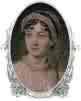
My fellow weary Janeites will be happy to hear that there is a recent volume of critical essays that bucks these vicious trends. Richard Jenkyns of Oxford has offered us a rare treat in his A Fine Brush on Ivory: An Appreciation of Jane Austen (Oxford University Press, 2004). Here, at last, is Austen without sensationalism; Austen without revisionism; Austen without an agenda. I nearly missed this slender book when perusing the shelves at my local library branch. Thank heavens that I didn't, for to read this thoughtful thesis is to drink from the refreshing well of elegance and sanity.

The main theme of A Fine Brush on Ivory is found in this declaration a bit of the way into the second chapter, "The Shape of Comedy": There are good, even great, novelists who are not good story-tellers, and there are highly gifted story-tellers who write thoroughly bad books. Jane Austen was a very good story-teller and a very good novelist. How did she do it? Mr Jenkyns then proceeds to show us how. That he is able to dissect and expound upon Miss Austen's craft in a way that, far from detracting from the mystery of her artistry, magically seems to enhance the reader's appreciation of it is a singular accomplishment for which he deserves not only our approbation, but our gratitude.

The book opens, appropriately enough, with a chapter titled, "Beginnings." And it is in this chapter that you discover that you are on excitingly uncommon Austen ground. Mr. Jenkyns uses the famous first lines of Pride and Prejudice as a springboard to examine what makes Miss Austen so very innovative and unique among novelists. I had never stopped to notice how differently P&P opens, not only compared with other writers both before and after her time, but also from Austen's other novels. Mr. Jenkyns points out that she begins with a pair of bold and succinct aphorisms, delves immediately into dialogue, and ends the chapter with a brief character study. Not only does this mark P&P as a comedy from the outset, not only does this structure read more like a play, but the character vignette at the end serves to congratulate the astute reader on what he has already discerned. In other words, by describing and defining Mr. and Mrs. Bennet at the end of a fast-paced and highly comical discourse, the author shares with her reader a sly, knowing wink when she "reveals" that Mr. Bennet is an odd mixture of "quick parts, sarcastic humour, reserve and caprice" and his lady possesses "mean understanding, little information and uncertain temper."

That is just a small slice of what awaits the lucky Austen fan who stumbles upon this tender tribute. Mr. Jenkyns not only delights in his subject, he has both the critical chops and the graceful pen to write a substantial contribution to Austen scholarship without sounding as though he were in the throes of a bowel complaint.

Richard Jenkyns touches upon all the novels, but his main concentration is upon Pride and Prejudice, Mansfield Park, and Emma. In each, he brings to light different ideas to ponder in subsequent re-readings of Miss Austen's work. Will Mrs. Norris seem any more sympathetic when we realize that she is the only loveless character in Mansfield Park?* Will our view of Emma change when we read Mr. Woodhouse as the villain of the piece? And, will Mr. Jenkyns assertion that Mr. Darcy's first proposal to Elizabeth reveals that "he is so desperate to get her into bed that he will marry her even though it will be a degradation to him" make Darcy even more of a sexy beast the next time we enjoy Pride and Prejudice?

Though, in the end, Richard Jenkyns's fine work may not be at the top of your mind the next time you revel in Austen, you will be infinitely richer for having had the experience of reading his thoughtful observations beforehand. Let them seep into the rivers of your subconscious, and you may just find something newer, deeper, even more fulfilling on Miss Austen's famous "little bit[s] (two inches wide) of ivory." I find it always easy to get more from Austen with every reading -- her bounty seems limitless -- but A Fine Brush on Ivory gives you a headwind on the next journey, and a kindred spirit to sail with as well.


*Having since re-read MP, I can answer that, for me, the answer is, "No."

Friday, May 18, 2007

Blog Posting Guilt

Wow! I am highly gratified that this Jane Austen tribute blog has been picking up a little in traffic; but with the delight in the kind comments I've received in post comments and in my guestbook comes the inevitable guilt that I have been neglecting Austensorium terribly.

The upside of productive guilt is that it can snap you out of a rut and inspire you to dig deeper and explore further, and I am determined that that shall be the end result of this blog guilt.

So, one goal I hope to achieve shortly is excavating my notes that I made while suffering through the 1999 Mansfield Park back in 2005 -- all my snarky little comments on a movie I thought was pointless -- and writing up the in-depth review I promised myself I'd complete two years ago.

Plus, I am very excited to update my links to other Janeite sites I've been privileged to come across in the intervening two years.

So, thank you kind commenters and well-wishers. You've inspired me to jump back into Austen lore and admiration in a big way.

Henry Tilney and I both find you all very nice.

Monday, April 09, 2007

A Truth Universally Acknowledged

From Cafe Press:


This is definitely a T-Shirt for me!

Tuesday, June 13, 2006

Charles T. Gets Austenfied!

Now that I have my very own Charles T. Chevy back, I'm going to decorate him according to my Janey-loving tastes. Thankfully, The Republic of Pemberley has provided a vast array of likely accessories in their Café Press Shop.

Here is the license plate frame that I've purchased:


My Other Car is a Barouche License Plate Frame

Jason said, "What's a 'barouche'?"
"Ha! Ha!" I replied, "If you know that not, well, then you know it not. It's a Jane Austen Insider's joke."
Of course, I then had mercy and shared that a barouche was the sports car of the carriage-era.

I also have this bumper sticker coming:


Janeite Bumper Sticker

Hopefully, Jane would not consider this display too vulgar. Were she only getting her share of the pewter, I think she would mind it not (and possibly be quite diverted by my want of sense, but, perhaps, gratified by my excessive sensibilities).

Happy driving for me!

Friday, June 02, 2006

A Whole Lot of Thrilling Jane Austen Quizzes

Visit this Jane Austen Trivia Quiz site and see if you are as baffled as I was by some of the questions.

I consider myself quite the Austen trivia buff, but the harder quizzes had me completely stumped. A good lesson in humility for your now-far-more-humble blogger.

Have fun!

Tuesday, May 30, 2006

After You've Read Persuasion For The Fifteenth Time . . .

Okay, so you've read the novels until their pages barely cling to their spines, and you're not sick of Jane (how could you ever be?), but you are beginning to fear that you have some sort of obsession, and you'd like to expand your horizons a wee bit before returning again to the comfort of Pemberley or Mansfield Park or, even, Kellynch Hall. What do you read?

Here are some suggestions from one who understands your predicament:

1) Cold Comfort Farm by Stella Gibbons The heroine of this book, Flora Poste, turns to Jane Austen as her arbiter of all that is right and good in civilized behavior. As if that were not enough to charm you, the writing is fresh and funny, and Flora herself is delightful as she goes about "tidying up" the complete dysfunction on her cousins' creepy old farm, Cold Comfort. Look for a strange "time-warp" tone to the book, as Gibbons set it about five to ten years in the future from when it was written in 1932. She assumes some technological advances which are pretty absurd, but it only adds to an otherworldly feeling and enhances the strange atmosphere of the novel. After you read this book, you will join the circle of those of us who smile when we hear: "I saw something nasty in the woodshed." or "There have always been Starkadders at Cold Comfort, Robert Poste's child." The author has taken as her motto this line from Austen's Mansfield Park: Let other pens dwell on guilt and misery. Few reads are more pure fun than Cold Comfort Farm.

2) Evelina by Fanny Burney You cannot go wrong reading a novel that Jane Austen herself enjoyed, most likely within ten years of its 1778 publication. Wit and humor abound here, as Burney excels in developing very individualized characters in this epistolary format. Of course, some of the characters are rather outlandish, but that is half the fun in reading this romp. The heroine, Evelina, is good, but not treacly, and the villain, Sir Clement, is bad, but not evil. Much of the humor comes from Evelina's friend's father, the Captain, with whom Evelina is staying, and his antagonism of Evelina's grandmother, Madame Duval (an English expatriate, living in France but visiting England), and her grandmother's male companion, Monsieur Du Bois. You'll find yourself cringing -- while laughing -- at his malicious delight in baiting the grande dame and her hapless beau. Plus, the novel is priceless for its portrait of late 18th Century England.

3) The Damnation of Theron Ware by Harold Frederic One of the trademarks of Jane Austen's style is her ability to place the reader in the middle of the story as an observer by demanding from them an emotional interpretation of scenes and situations to which she gives only the most deftly bare of descriptions. I found this quality in abundance in Frederic's novel about the fall from faith (such as it was) of a Methodist minister in small-town, turn-of-the-century America. Much like The Six -- when asked if he ever read novels, British philosopher Gilbert Ryle said, "Yes, all six every year," referring, of course to Jane Austen -- Theron Ware holds up to multiple re-readings, as it is very subtle in character shadings and plot points. You will wonder, long after turning the last page, what exactly was Levi Gorringe doing at the revival meeting? Was he trying to seduce Alice Ware? Did Theron ever have any real faith to lose, or was his merely a ministerial profession, not a calling? Do Brother and Sister Soulsby actually believe any of the things they preach at revivals, or is it merely a razzle-dazzle theatrical show? What exactly is the relationship between Father Forbes and Cecilia? So, you will read the book again and again. Of course, to my way of thinking, the capper of the novel is in the last chapter -- for where else is the natural habitat for a minister who has lost his faith and his soul than as a Senator in Washington, D.C.?

4) The Golden Vanity by Isabel Paterson Jane Austen often set up her storylines around three women and their varying fortunes. Pride and Prejudice centers around Elizabeth, Jane, and Lydia. Sense and Sensibility focuses on Marianne, Elinor, and Lucy Steele. Persuasion is primarily about Anne, but we see her juxtaposed against both her own two sisters and the Musgrove sisters. You see my point. The Golden Vanity borrows this device, and uses it effectively to tell the stories of three cousins journeying through the Great Depression. Mysie, who is clearly in the author's greatest sympathy is a wise-cracking stage actress, getting by day-by-day. Gina is a gold-digger who is focused only upon snagging a rich fellow for financial security. Geraldine is a wife and mother living with that curse of Patersonian fiction --the ineffectual husband. In fact, all the men in this novel are pretty weak and unsubstantive. Two are not, but they don't offer much better hope to women looking for strong men. One of them is unable to express himself to the woman he desires -- stranding forever their relationship in limbo. The other is a gangster. The Golden Vanity also borrows another Austen staple -- the older woman, often a dowager, usually either supportive or antagonistic (or both -- I'm thinking of Lady Russell) -- who sets the tone for the old guard, the old ways, and is a foil to the heroine(s). In this book, that character is played by Mrs. Siddall, Gina's eventual mother-in-law. She's a grand old lady, but she clearly belongs to the previous generation -- which puts her highly in favor with Paterson.

So, my friends, here are four novels to tempt you and appease you while you rest and prepare for the next Austen blitz. Happy reading, fellow Austenites! Peace, civility, and respite from vulgarity to all . . .

Wednesday, November 16, 2005

A Review of the New Pride and Prejudice


Pride and Prejudice (2005) Poster
I have no idea if I will be able to catch this flick in the theaters, but I am certain that I will rent it as soon as it is released on DVD. I found this even-handed review at Christianity Today. I appreciate the fact that the reviewer acknowledges the first reaction by this (and many an other, I'm sure) P&P fan: Why? The reviewer then does an admirable job explaining why she thought this movie was made and why it is appropriate for a Jane Austen fan to devote two hours to this latest adaptation. So, I'm convinced that it should be worth a viewing; though, Colin Firth will always be the quintessential Mr. Darcy in my mind, just as the glorious Jennifer Ehle could never be replaced as dear Lizzy. Case closed.

The Classics: Jennifer Ehle and Colin Firth

Jennifer Ehle and Colin Firth

The Upstarts: Keira Knightley and Matthew MacFayden

Keira Knightley and Matthew MacFadyen

Some other P&P adaptations that I'd like to see (preferrably curled up on the couch on a rainy Sunday afternoon, my Bug napping, my Sweetie by my side, sipping Twinings Tea and munching on popcorn) are Bride and Prejudice (the Bollywood version!) and Pride and Prejudice: A Latter Day Comedy (the Mormon version!).

Bride and Prejudice

Pride and Prejudice: A Latter Day Comedy

Okay, Maybe I Was Trying For This One ...

Okay, it would have been intolerable to have come out as any heroine other than dear Lizzy.

I'm certain that I was anticipating the answers most likely to point to "fine eyes" and a "lively mind."

So what?

I am like Elizabeth Bennet.

Elizabeth Bennet


You are Elizabeth Bennet from Pride and
Prejudice
! Yay, you! Perhaps the
brightest and best character in all of English
literature, you are intelligent, lively,
lovely-- in short, you are the best of company.
Your only foibles are that you stick with your
first impressions... and your family is quite
intolerable.

Which Jane Austen Character Are You?
brought to you by
Quizilla

Friday, November 11, 2005

Janey-Smarts!

You Win!!! :>
You scored 100% Janey-smarts
WELL DONE!!! Is she your favorite author too?? Even if she's not, you definitely know your stuff! Have your read the novellas? Of those, I recommend Lady Susan. :>


Think you know Jane's novels? Take this test and find out your Janey-Smarts.

Friday, September 23, 2005

I Buy More Jane Austen Books

Just because Jane Austen has not put out a new novel in almost 200 years, doesn't mean that I do not have to keep spending money on her work. I just got a Barnes & Noble gift card from my parents for my birthday -- Hallelujah! Hallelujah! -- and I immediately went to www.bn.com and purchased the Norton Critical Editions of Pride and Prejudice, Sense and Sensibility, Mansfield Park, Northanger Abbey, and Persuasion (I already had the Norton of Emma). Now, I at last have a complete set of Jane Austen, by one publisher, in one format. The Norton Critical Editions are very good, as a rule, since they have some notations and often illuminating essay addendums.

I have actually worn out paperback copies of my Jane Austen books. Mansfield Park is on its last legs. It would not survive another read-through. Pride and Prejudice has already had one copy recycled, and copy the second isn't looking too healthy anymore. Emma (not the NCE one), Northanger Abbey, Persuasion -- all could use retirement. The only one I haven't worn out is Sense and Sensibility, but, as I've already posted, that's the one I re-read the least.

I have also worn out many L.M. Montgomery books and have had to replace them. I just love books to their death - taking them everywhere: eating while reading, reading in the bath, marking my place by leaving them open -- belly-side down, spine up. Do not ever lend me a book, if you expect to get it back pristine. Jason, on the other hand, treats books with reverence and respect (but, I suspect, far less actual love) and handles them with kid gloves. He doesn't let me touch his books. I cannot really blame him.

So, new Jane Austen books for me -- a happy birthday indeed.

Wednesday, September 14, 2005

When I Fell for Fitzwilliam Darcy

While Lizzy may jokingly have begun to fall in love with Mr. Darcy upon "first seeing his beautiful grounds at Pemberley," he had captured my heart many pages before when he asked Elizabeth during their dance at the Netherfield Ball, "What think you of books?" Especially with that little smile of his that Jane Austen is particular to note for our benefit. To a bibliophile like myself, that question is the most beguiling of conversation starters. Silly Lizzy in her little fit of Wickham-loving pique fails to be charmed, but the less prejudiced reader knows better.

Or, maybe I fell earlier still when Mr. Darcy said that a truly accomplished woman in his eyes must add to all feminine talents, civilities, and gentilities "something more substantial, in the improvement of her mind by extensive reading." Mr. Darcy: the ultimate embodiment of the thinking woman's hero!

What if Jane Austen had married her own Mr. Darcy? Happy for her to be the wife of such a man! Sad for us, since she would most likely have abandoned literary pursuits in her state of domestic felicity.

Wednesday, September 07, 2005

The Annotated Pride & Prejudice (2004)

Hardcore Austen fans: Buy this edition!

I just got from www.bn.com The Annotated Pride & Prejudice, and it has exceeded my (admittedly high) expectations. The annotator/editor is David M. Shapard who, despite having graduated from UC Berkeley, takes a level-headed, even-handed approach to this most beloved of Jane Austen novels. While I have disagreed with a few of his "clarifications" of Austen's intended meaning, I have been very impressed by his scholarly approach to contextualizing this book in terms of time and place. Especially appreciated by this reader were the chronology appendix, the citations and cross-references from Austen's other works as well as her juvenilia and personal letters, and the handiness of having historical explanations and definitions immediately accessible to the text. I also really liked the fact that the annotations were all included on the right-hand side of the book, with the text on the left-hand side. Although it was a little difficult to get used to, it certainly beats having all the annotations at the end of the book, as was done by Dierdre La Faye in The Letters of Jane Austen collection. Most preferrable for me would have been the notes at the bottom of the pages of text, as is my MacArthur Study Bible, but I am determined to be pleased with what I can get. The only addition I can think of that would have improved this edition would have been some geneology charts for the characters, including their full names and relationships as far as Jane Austen provided. That would have been desirable indeed.

An endearing part of this edition lies in the acknowledgments that the editor provides prefacing the text. He thanks the "citizens of the Republic of Pemberley, who formed one of the inspirations for my decision to embark on the project in the first place, and whose questions and discussions concerning Jane Austen and Pride and Prejudice have stimulated my thinking and helped direct me to issues and points in the novel that deserve explanation or commentary." This tickled me pink, since I am such a fan of that wonderful community.

I cannot think of one library that would not be benefitted by this excellent edition. It is at least a venial sin for any Austentatious-type of collection to be without this well-done volume.

Friday, July 29, 2005

If I Were A Rich Mom - La-da-da-da-da-da-da-da-da-da-da!

Alibris has, through their used and rare book search, a first edition (1813) copy of Jane Austen's Pride and Prejudice from Peter Harrington's Books in the UK for a mere $43,474.89.

(I wonder: Why the 89¢? Why not round it up to $43,475.00? Would anyone at all prone to purchasing such a tome be put off by that extra 11¢? But I digress.)

Aaah . . . for a spare $50,000!

There's your "pewter," dearest Jane, but none of it matters to you now. God bless you!

Sponging Off Jane

What Jane Austen Earned from Her Books During Her Lifetime
(from The Friendly Jane Austen by Natalie Tyler (1999), pg. 227)

1803: £10 from Richard Crosby for the manuscript of Susan (later published posthumously as Northanger Abbey)

1811: £140 from the publisher Thomas Egerton for Sense & Sensibility. £150 from its profits.

1812: £110 for Pride & Prejudice.

1814: £450 from the publisher John Murray for Emma and the copyrights to Sense & Sensibility and Mansfield Park.

Any way you look at it, even inflating the total to today's currency, Jane Austen was severely underpaid for a lifetime of work, or, rather, for a lifetime of such genius. Many other authors could have made far less and been justly compensated for their drivel, but Miss Austen deserved the wealth of Solomon for matching his wisdom and, surely, outshining that ancient monarch's wit. Now, coming upon two full centuries after her death, many good folks have worked her legacy for a tidy profit in the form of biographies, literary critiques, sequels, films, plays, audiobooks, and countless sundry others of the Austenly themed.

Here's my list of some of the very best and very worst that I have so far found of those who have dared to tread on the blessed ground first indented by Jane's daintily-slippered feet.

Best and Worst Film Adaptations:

Best: Pride & Prejudice (1995) (BBC/A&E) - Mention this finest of the film adaptations to any female Janeite and watch her bosoms heave in her Empire-waisted gown. Colin Firth as Mr. Darcy was a stroke of casting genius - he brings a vigor and virility to a role that could easily be made too restrained and dandified; yet, he is completely believable as the proprietor of Pemberley - conveying equally well his complete abhorrence of Lizzy's vulgar relations and his burgeoning attraction to her despite it all. Speaking of whom, no one else can ever be Lizzy to me now other than the spectacular Jennifer Ehle. She is simply amazing as this most beloved of Brit-Lit heroines - how daunting it must have been for her to undertake this role, knowing how Elizabeth Bennet is nearly sacrosanct to P&P fans! The rest of the cast is exemplary too - I especially like Mr. Collins, Jane Bennet, and Mr. Bennet. I am so grateful that this mini-series format allows for five hours to revel in the perfection of it all.

Worst: Mansfield Park (2000) - It is very difficult for me to express fully my all-consuming hatred for this travesty cloaked in celluloid. Suffice it to say that it sucks with a sucking power that Hoover would envy. It sucks itself into the black hole of "cinema-with-an-axe-to-grind" that doesn't even try to make a faithful representation of the work which it purportedly portrays. I'd tar and feather Patricia Rozema if I ever caught her walking down the street. Jane, being ever so much more the lady than I, would probably merely freeze her out with the cool kind of cutting at which the Eighteenth Century English gentry excelled. I'm planning on suffering through it again, so that I can report on more of the specific ways that it sucks. Look for that future post.

Best and Worst Novel Sequels: (I have not read every sequel, having only so much time and stomach for what is too often disappointing fare. For a complete review and opinions on the myriad JA sequels, I refer you to The Republic of Pemberley.)

Best: Jane Fairfax by Joan Aiken - Not exactly a "sequel" but a "parallel-quel," this is a really rather good re-telling of Emma from the point of view of a minor character, Jane Fairfax. The author also fleshes out Jane's back-story and provides believable insights and motives for an (in Emma) rather unfathomable young woman.

Honorable Mention: Presumption: An Entertainment by Julia Barrett - As far as I can remember (though it has been several years since I read it) this sequel to Pride and Prejudice did not fail as miserably as most sequels to JA's work. It centers around Darcy's sister Georgiana and her courtship and marriage, and it is not too offensive without being particularly memorable or endearing.

Worst: Oh Goodness! Anything by Emma Tennant, who seems to think that writing a good JA sequel involves having characters do and say things completely, well, out of character! I do not think that Emma Tennant likes JA's novels, or, if she does, it is a superficial appreciation without any understanding of what make JA so very beloved. If you want to torture yourself, read Emma Tennant's Pemberley (a sequel to Pride and Prejudice) and Emma in Love (a sequel to Emma). JA would certainly not approve of this author, and she would not even be excessively diverted by her literary pretensions. Emma Tennant is the Patricia Rozema of JA sequels.

Best and Worst Spin-Offs: (Works definitely related in some way to Jane Austen, but not directly based upon her work)

Best: The Jane Austen Mysteries by Stephanie Barron - Jane as detective - absolutely delicious! I really like this series, and I think that Ms. Barron has done a better job than just about anyone in capturing the ironic, yet genteel, tone of Ms. Austen. An interesting and fulfilling vision of what Jane Austen fans and biographers often refer to as the "lost years," the eight year period between Steventon Rectory and her original drafts of P&P, S&S and NA, and Chawton House and the writing of MP, Emma, and Persuasion.

Worst: Bridget Jones's Diary by Helen Fielding and Pride and Prejudice and Jasmin Field by Melissa Nathan - These British women authors need to get over riding on Jane's coattails to chick lit fame. I can understand borrowing elements of JA's work - she was so foundational as an author, it is difficult not to borrow a little bit - but re-tellings of P&P over and over again (except with sex and more modern sensibilities - yuck!!) are getting old, ladies. Try for something a bit more original, like Sophie Kinsella's Shopaholic series - echoes of JA without direct lifting of plot and character.

Best and Worst Jane Austen Reference Works:

Best: The Friendly Jane Austen by Natalie Tyler - This is a wonderful collection of fact and supposition, scholarly insights and not-so-scholarly gossip. If I were to recommend just one book to the novice Jane Austen fan who loved P&P and wanted to know more, this is the book I would suggest. Chock full of trivia and tid-bits, you couldn't ask for a better overview of everything JA.

Worst: Sibling Love & Incest in Jane Austen's Fiction by Glenda A. Hudson - Okay, probably not too much of an explanation is needed here after taking a look at the title, but I just want to add that it managed to take a completely prurient topic and turn it into the driest of scholarly assessments. So, it's premise is disgusting, and it's body is boring. Enough said.

Best and Worst Biography:

A Confession: I have not read a biography of Jane Austen for many years. At one point, I read two different biographies, Jane Austen: A Life by David Nokes and Jane Austen: A Life by Claire Tomalin, in immediate succession. One, I liked very much; the other I didn't really like at all. Now, I cannot remember which was which. I shall have to re-read them and post more about that later.


Well, that's a brief overview. I'm sure there will be lots more sponging off of Jane Austen in the future. They say that "imitation is the highest form of flattery," and I'm certain Jane would be tickled, but, as she once wrote, "tho' I like praise as well as anybody, I like what [brother] Edward calls pewter too." I wish that she could have had fewer financial worries during her lifetime. No novelist deserved pecuniary advantage more than she.

Thursday, July 14, 2005

Upon Re-Reading Mansfield Park . . .

I am nearing the end of probably my fifth or sixth reading of MP, and I know what's coming up.

**spoiler alert**spoiler alert**spoiler alert***

I know that in a few more pages, Henry Crawford will run off with Maria Rushworth, condemning him and her forever in the eyes of the Bertrams and Fanny Price. Oh, Henry, don't do it! You're getting so close to Fanny. Only let Edmund propose to Mary, let her accept his hand, and give Fanny a little while to get over her disappointment. Stay the course - she will reward your steadfastness with her love in just a little while. Don't show her that her opinion of your principles was well-founded. Don't do it!

I love MP, but the ending kind of stinks. Mary and Henry Crawford are so delightful. I cannot help but think that they would have, in turn, made better spouses for Edmund and Fanny than those two were for each other. Oh, Jane, what would you think of my impudence and audacity in wishing a re-write of the ending?

Fanny and Edmund - each one so principled and steady and virtuous and dull, dull, dull. I picture their married home-life as consisting of much sitting around, reading poetry, and rhapsodizing on Nature and its glories. Not that there is anything wrong with Nature and its glories - I rather like them myself - but where is the witty interplay of lively (and acerbic) observations of the human scene that made this Georgian/Regency era such a fun one? Fanny and Edmund have to be the most boring couple of protagonists ever to tie the knot in a Jane Austen novel.

And yet, I love this novel. It is so fine and well-written and entertaining. I actually bristled when I read one person's opinion that it was one of the "lesser works" of Jane Austen. It is, in fact, one of the greater works of all British Literature - thank you very much.

Jane Austen recorded for posterity all of her family's and friends' observations of MP. They are delightful, in and of themselves, to read. It is amazing how frank some of the comments are:

Mrs. Augusta Bramstone - owned that she though S&S and P&P downright nonsense, but expected to like MP better; &, having finished the first volume, flattered herself that she had got through the worst.

Fanny Cage - did not much like it - not to be compared P&P - nothing interesting in the characters - language poor - characters natural and well-supported - improved as it went on.

Mrs. Bramstone - . . . Preferred it to either of the others - but imagined that might be her want of Taste - as she does not understand Wit.

Edward & George (Knight - JA's nephews) - Not liked it near so well as P&P - Edward admired Fanny - George disliked her - George interested in nobody but Mary Crawford - Edward pleased with Henry C. - Edmund objected to as cold and formal - Henry C.'s going off with Mrs. R. - at such a time, when so much in love with Fanny, thought unnatural by Edward.

To this last, I must heartily agree. HC seems so in love with Fanny - he seems so likely to have reformed and refined his rakish ways - it just is too weird and jarring when we learn of the adulterous elopement. I'm sure JA wanted to shock us completely, but it is a most dreadful shock, because (at least to me) Henry Crawford seems a much better match for Fanny - who needs someone to liven her spirits. Mary Crawford would have shaped Edmund right up from his superfluity of gravity, and he would have steadied her character. Oh, it's just too bad.

Oh well, what's done is done. MP will be 200 years in print in just a few years. I'm sure JA would have been highly gratified to see its enduring popularity and success.

Monday, June 27, 2005

A Quick Ranking. . .

My quick rank of the six completed novels:

1. Pride & Prejudice - Goodness, I just re-read this novel for at least the tenth time. No better novel, in my opinion - not only Jane's best, but the best novel ever. "Light, bright and sparkling," with the heroine lovingly (and correctly!) described by her creator - "as delightful a creature as ever to appear in print." If you do not love Elizabeth Bennet, you may not be my friend.

2. Mansfield Park - Apparently, from others' opinions I have read, this is the red-headed step-child of the Austen ouvre. I just cannot see why anyone would not love it. It is so marvelously structured and so thoroughly intuited as far as character development. It leaves me in wonder at its perfection of style and tone. Fanny Price may not be the most charismatic of Austen heroines, but the ensemble production more than makes up for any of her deficiencies.

3. Persuasion - What a lovely novel! Austen's humor is still sharp, but the total effect of the work is softer somehow, more autumnal (to use the cliched description for this story). Anne Elliot is so real, and our invitation to her inner-self is one that we should not take too lightly. The major fault of this work is the whole Mrs. Smith revelation of Anne's cousin, which doesn't really work for me. It's rather jarring. I wonder how JA would have refined and re-worked her writing if she had lived to see it through publication. I'm just so grateful that we have it at all.

4. Emma - Emma Woodhouse is not a bad egg, and this novel is quite entertaining in the main. I think it runs on a little long, and some of the sub-plots are strange (what's with Harriet's nearly getting attacked by the gypsies with Frank Churchill's rescuing her?). We could have used a little more of the Eltons, who divert me exceedingly. Emma does not seem to have much to recommend her to Mr. Knightly (she seems to be the least intelligent of Austen's ladies - excepting Catherine Moreland), and Mr. Knightly seems too old for her anyway. The ending always leaves me a little off-kilter and wanting more of something and different of everything.

5. Northanger Abbey - There is a lot of humor in this strange, little work. It is entertaining, but obviously written by a diamond in the rough and not the accomplished author of S&S and beyond.

6. Sense & Sensibility - I have read this through several times, and I just can't force myself to love it over its number six placement. Since it is Jane Austen, it is far better than just about anything else you can read, though. Much like my feelings for Carolyn Arends' songs (about which I always think that the least liked of her songs still beats out a song by anyone else), I'd rather read S&S than something else by another author.

The Whys and Wherefores

The Republic of Pemberley is a wonderful site, but I think that I've come to that party a little too late to dance, so I'll be a lurker there.

This will be my little outpost of Austen Adoration, solely for my own amusement and anyone else's who happens to stumble across this humble blog.

So, to this first short post I will add:

"You deserve a longer letter than this; but it is my unhappy fate seldom to treat people so well as they deserve. . . .God bless you!" --Jane Austen, letter to Cassandra Austen (1798)